


Smart Financial Strategies for Businesses and InvestorsDefining Financial Management in the Modern Economy
In May 2026, navigating the complexities of the global economy demands more than just basic bookkeeping. For businesses and individual investors alike, smart financial management is the cornerstone of sustainable growth and security. It’s about making informed decisions, from strategic capital allocation to understanding how to manage silver investments as part of a diversified portfolio.
We understand that effective financial oversight is not merely an administrative task; it’s a strategic imperative. It ensures stability, fosters growth, and protects against unforeseen challenges. Without a robust financial framework, organizations risk missed opportunities and potential pitfalls.
In this extensive guide, we will delve into the core principles of financial management. We will explore its key objectives and broad scope, differentiating it from related fields. We’ll also discuss the essential skills, education, and tools required for success in this dynamic profession. Finally, we will reveal how financial management drives strategic decision-making, supports capital investments, and helps mitigate risks for long-term organizational success.
Financial management is the strategic planning, organizing, directing, and controlling of an organization’s monetary resources to achieve its objectives. It encompasses a broad range of activities, from day-to-day cash flow monitoring to long-term investment decisions, all aimed at maximizing the firm’s value. Unlike simply tracking financial transactions, financial management is forward-looking, focusing on how money can be best utilized to support strategic goals and ensure sustained profitability.
This field is often discussed alongside related disciplines like corporate finance and managerial finance, but subtle distinctions exist. Corporate finance typically deals with long-term capital decisions, such as raising capital, capital budgeting, and dividend policies, often from the perspective of large corporations. Managerial finance, on the other hand, often focuses on internal decision-making within a company, using financial data to optimize operational efficiency and resource allocation. Financial management acts as an overarching framework, integrating these perspectives to ensure comprehensive oversight of all financial aspects. It’s about ensuring a company’s financial health, compliance with regulations, and its ability to create and sustain value for its stakeholders. Modern financial management also leverages advanced platforms, such as those provided by Vector Payments, to streamline payment processes and enhance overall financial efficiency, offering robust Vector Payments financial management solutions.
Core Objectives of Financial Management
The primary objectives of financial management extend beyond mere profit generation. While maximizing profits is a foundational goal, it’s balanced by several other critical considerations that ensure long-term viability and stakeholder satisfaction.
- Profit Maximization: This involves making financial decisions that lead to the highest possible earnings for the company. However, true profit maximization considers not just short-term gains but also sustainable, long-term profitability, often achieved when marginal cost equals marginal revenue.
- Maximizing Shareholder Wealth: This objective prioritizes increasing the value of the company’s stock over time. It considers both current profits and future growth potential, reflecting a more holistic view of value creation than just immediate earnings.
- Ensuring Liquidity and Cash Flow: Maintaining sufficient cash flow is crucial for meeting short-term obligations, such as payroll, supplier payments, and operating expenses. Effective financial management tracks and forecasts cash flows to prevent liquidity crises and ensure operational continuity.
- Meeting Regulatory Compliance: Adhering to all relevant financial laws, regulations, and reporting standards is non-negotiable. This includes tax laws, industry-specific regulations, and accounting principles, protecting the company from legal penalties and reputational damage.
- Risk Management: Identifying, assessing, and mitigating financial risks is a core objective. This involves managing market risks, credit risks, interest rate risks, and operational risks to safeguard assets and ensure financial stability.
- Optimal Capital Structure: Determining the right mix of debt and equity financing is vital. An optimal capital structure minimizes the cost of capital while maximizing the firm’s value.
- Efficient Resource Allocation: Financial management guides how capital is invested across various projects and departments, ensuring that resources are deployed where they can generate the highest returns and contribute most to strategic goals.
The Scope of Financial Management in 2026
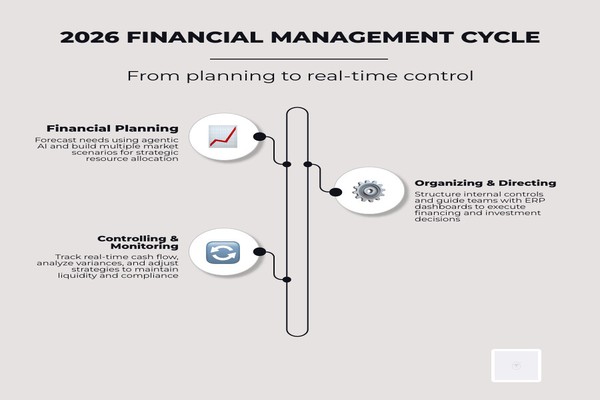
The scope of financial management in May 2026 is dynamic and ever-expanding, influenced heavily by technological advancements and complex global markets. It encompasses four major responsibilities: planning, organizing, directing, and controlling a business’s monetary resources.
- Financial Planning: This involves forecasting financial needs, setting financial goals, and developing strategies to achieve them. Modern planning leverages sophisticated tools and techniques, including agentic AI, which can build predictive financial models from historical data, significantly improving forecasting accuracy. This allows for the development of multiple financial scenarios, preparing organizations for various market outcomes.
- Financial Organizing: This entails structuring financial activities, assigning responsibilities, and establishing clear lines of authority. It includes setting up internal controls, managing financial systems, and ensuring that all financial functions are integrated seamlessly.
- Financial Directing: This involves guiding and motivating financial teams, making key investment and financing decisions, and ensuring that financial strategies are implemented effectively. It also includes managing relationships with investors, banks, and other financial stakeholders.
- Financial Controlling: This crucial aspect involves monitoring financial performance against budgets and plans, analyzing variances, and taking corrective actions. Real-time cash flow monitoring, facilitated by integrated ERP platforms, provides immediate visibility into financial health, allowing for agile adjustments. This also extends to internal controls, ensuring the integrity of financial data and processes.
The modern financial manager, therefore, is not just a number-cruncher but a strategic partner, deeply involved in resource deployment and operational efficiency across the entire organization. They translate complex data into actionable insights, influencing decisions from inventory management to market expansion.
The Strategic Scope of Financial Management
Financial management is intrinsically linked to an organization’s strategic direction, serving as the backbone for critical decisions related to capital investment and long-term goal attainment. It’s about leveraging financial insights to drive growth, manage risk, and allocate resources effectively. Financial managers today utilize a suite of advanced tools, from sophisticated ERP systems that provide real-time financial visibility to specialized financial calculators like the HP 12C or TI BA II Plus, and powerful data analytics platforms. These tools enable them to process vast amounts of information, develop precise forecasts, and evaluate complex investment opportunities. For instance, sophisticated modeling helps in understanding the potential impact of various investment choices, including how to effectively manage silver investments as part of a diversified portfolio strategy.
Risk Identification and Mitigation
One of the paramount responsibilities within financial management is the proactive identification, measurement, and mitigation of financial risks. In today’s volatile economic landscape, understanding and managing these risks is critical for safeguarding an organization’s assets and ensuring its stability.
- Risk Identification: This initial step involves systematically pinpointing potential threats that could negatively impact financial performance. Common risks include market risk (fluctuations in asset prices, interest rates, or exchange rates), credit risk (the possibility of borrowers defaulting on their obligations), liquidity risk (inability to meet short-term financial demands), and operational risk (failures in internal processes, systems, or people). Beyond these, financial managers must also consider “tail risks,” which are rare, extreme events that fall outside typical probability distributions, often associated with “black swan events” like the 2008 financial crisis or the COVID-19 pandemic.
- Risk Measurement: Once identified, risks must be quantified to understand their potential impact. Tools like Value at Risk (VaR) estimate the maximum potential loss over a specific period with a given confidence level. More advanced techniques like Conditional Value at Risk (CVaR) go further by estimating the expected loss beyond the VaR threshold. Stress testing and scenario analysis are also crucial, simulating how a portfolio or business would perform under various adverse conditions, including extreme market movements.
- Risk Mitigation: This involves developing and implementing strategies to reduce the likelihood or impact of identified risks. Diversification across different asset classes, industries, and geographies is a fundamental mitigation technique. Hedging strategies, such as using derivatives (futures, options), can protect against adverse price movements or currency fluctuations. Establishing robust internal controls, maintaining adequate insurance coverage, and setting clear risk tolerance limits are also vital. For example, reducing exposure to a single asset or market, or even pairing investments with competitors, can help offset potential losses. The key is to ensure that the cost of mitigation does not exceed the potential losses from the risk itself.
Supporting Long-Term Organizational Goals
Financial management is not just about managing the present; it’s fundamentally about shaping the future. It provides the analytical framework necessary for strategic decision-making, particularly concerning capital investment and the pursuit of long-term organizational goals.
- Capital Investment Decisions: These are some of the most crucial choices a company makes, involving significant outlays of capital for projects expected to generate returns over many years. Financial managers employ various techniques to evaluate these opportunities:

- Net Present Value (NPV): This method calculates the present value of all future cash flows generated by a project, discounted at the company’s cost of capital, and subtracts the initial investment. A positive NPV indicates a project is expected to be profitable.
- Internal Rate of Return (IRR): The IRR is the discount rate that makes the NPV of all cash flows from a particular project equal to zero. If the IRR is higher than the company’s cost of capital, the project is generally considered attractive.
- Payback Period: This simple metric calculates the time it takes for a project’s cash inflows to recover the initial investment. While useful for liquidity assessment, it doesn’t consider the time value of money or cash flows beyond the payback period.
- Other methods like the Discounted Payback Period, Profitability Index, and Equivalent Annual Cost also provide valuable insights into capital budgeting.
- Strategic Decision-Making: Financial analysis informs almost every major strategic decision, from market entry and product development to mergers and acquisitions. By providing insights into profitability, cash flow implications, and risk profiles, financial management ensures that strategic choices are financially sound and aligned with the company’s overall objectives.
- Firm Valuation: Understanding and enhancing firm valuation is a continuous process. Financial managers use various valuation models to assess the current worth of the company and identify drivers of value. This knowledge is critical for attracting investors, facilitating M&A activities, and measuring the success of long-term strategies. By optimizing capital structure, managing costs, and investing wisely, financial management directly contributes to increasing shareholder wealth and achieving sustained growth.
Advanced Investment Strategies: Diversification and Precious Metals
In an increasingly interconnected and often unpredictable global economy, diversification stands as a cornerstone of smart financial management for both businesses and individual investors. It’s the strategy of spreading investments across various assets, industries, and geographies to minimize risk. A well-diversified portfolio can cushion against volatility in any single asset class, ensuring greater stability and potentially more consistent returns over time.
For many, this diversification strategy often includes alternative assets, with precious metals like gold and silver playing a significant role. These metals have historically served as a hedge against inflation and economic uncertainty, offering a tangible store of value that often moves independently of traditional financial markets. Strategies such as Autoinvest programs and Dollar Cost Averaging (DCA) are particularly effective when incorporating precious metals into a portfolio. DCA involves investing a fixed amount of money at regular intervals, regardless of the asset’s price, which helps average out the purchase cost over time and mitigates the risk of market timing. This systematic approach can be highly beneficial for building a robust physical asset allocation, especially for those looking to protect their portfolio from downturns.
The Benefits of Physical Gold and Silver
Investing in physical gold and silver offers distinct advantages that contribute to a well-rounded financial management strategy and robust portfolio protection.
- Inflation Hedging: Gold and silver have historically demonstrated their ability to retain purchasing power during periods of inflation, when the value of fiat currencies erodes. As the cost of living rises, the intrinsic value of these metals often increases, protecting wealth.
- Portfolio Volatility Reduction: Due to their low correlation with traditional assets like stocks and bonds, precious metals can act as a stabilizing force within a portfolio. When equity markets experience downturns, gold and silver often hold their value or even appreciate, reducing overall portfolio volatility.
- Tangible Store of Value: Unlike paper assets, physical gold and silver are tangible commodities that cannot be digitally erased or printed into oblivion. This physical nature provides a sense of security and permanence, especially during times of geopolitical instability or financial crisis.
- Face Value Protection and Legal Tender Status: In some jurisdictions, certain precious metal coins (like American Gold Eagles or Canadian Silver Maples) carry a legal tender face value, offering an additional layer of security, though their market value typically far exceeds this. This feature can offer peace of mind and fraud prevention, as these coins are recognized and verifiable.
- Diversification Beyond Traditional Assets: Adding precious metals provides a unique form of diversification that extends beyond conventional stocks, bonds, and real estate. This broadens the investment base, reducing concentration risk. For detailed guidance on building your precious metals portfolio, you can explore resources like our Gold Investment Guides and Tips or learn about The Role of Physical Gold Purchase in Diversifying Portfolio. You might also wonder How Much Gold Silver Should I Have or How Much of My Net Worth Should Be in Gold Silver.
Exit Strategies and Liquidity
While the benefits of holding precious metals are clear, a comprehensive financial management plan also considers exit strategies and liquidity. Understanding how to convert these assets back into cash is crucial for effective portfolio management.
- Market Liquidity: Gold and silver are highly liquid global commodities, meaning they can be bought and sold relatively easily in markets worldwide. This liquidity ensures that investors can access their capital when needed.
- “Sell to Us” Programs: Many reputable dealers offer “sell to us” programs, providing a straightforward and secure avenue for selling your physical metals. These services often offer competitive pricing and streamlined processes, simplifying the liquidation process.
- Private Vault Storage: For large holdings, secure private vault storage offers not only protection but also facilitates easier transactions. Stored assets can often be sold directly from the vault, reducing the need for physical transport and enhancing secure logistics.
- Understanding the Gold/Silver Ratio: Keeping an eye on indicators like Understanding the Gold Silver Ratio: A Key Indicator for Precious Metals Investors can help inform decisions on when to buy or sell, optimizing the timing of your transactions.
- IRA Investing in Gold: For those looking to integrate precious metals into their retirement planning, options like an IRA Investing in Gold or a Self Directed Gold IRA provide tax-advantaged ways to hold these assets, further emphasizing the importance of planning for both accumulation and eventual distribution.
Career Trajectories and Professional Outlook
The field of financial management offers a robust and highly rewarding career path, characterized by strong growth and competitive compensation. According to the U.S. Bureau of Labor Statistics, the median annual wage for financial managers was an impressive $161,700 in May 2024. This figure underscores the high value placed on expertise in managing an organization’s financial health.
The job outlook for financial managers is exceptionally positive. Employment is projected to grow 15 percent from 2024 to 2034, a rate significantly faster than the average for all occupations. This growth translates to approximately 74,600 openings for financial managers projected each year, on average, over the decade. This consistent demand reflects the increasing complexity of financial markets, the ongoing need for strategic financial guidance, and the expanding role of financial managers in driving organizational success. Aspiring financial managers typically need a bachelor’s degree in finance, accounting, economics, or business administration, coupled with at least five years of experience in a related business or financial occupation.
Skills and Education for Modern Managers
To excel in the dynamic field of financial management, professionals in May 2026 require a blend of strong academic foundations, practical experience, and evolving skill sets.

- Educational Background: A bachelor’s degree is typically the entry point, but many financial managers pursue advanced degrees like a Master of Business Administration (MBA) with a finance specialization. Certifications such as the Certified Public Accountant (CPA) or Chartered Financial Analyst (CFA) are highly valued, demonstrating specialized knowledge and commitment to ethical standards.
- Technical Proficiency: Mastery of financial software and tools is essential. This includes advanced spreadsheet modeling, proficiency with Enterprise Resource Planning (ERP) systems, and familiarity with specialized financial calculators (e.g., HP 12C, TI BA II Plus) for complex calculations like time value of money. Data analytics skills, including data visualization and the ability to interpret large datasets, are increasingly critical for translating financial information into actionable insights.
- Analytical and Problem-Solving Skills: Financial managers must possess sharp analytical abilities to evaluate financial statements, assess investment opportunities, and identify potential risks. They need to be adept at problem-solving, developing creative solutions to complex financial challenges.
- Leadership and Communication: Beyond technical skills, effective financial managers are strong leaders who can guide teams, collaborate with other departments, and communicate complex financial information clearly to non-finance colleagues and senior executives. Collaborative leadership is key to translating financial strategy into company-wide action.
- Industry-Specific Knowledge: Depending on their role and industry, financial managers must have specialized knowledge of relevant tax laws, regulations, and market dynamics. This ensures compliance and allows for tailored financial strategies. For those looking to enhance their skills, programs like the Financial Management Specialization on Coursera, which has over 148,200 enrolled learners, offer comprehensive training in areas like financial accounting, investments, and corporate finance.
Academic and Professional Standards
The field of financial management is continuously evolving, driven by rigorous academic research and the establishment of high professional standards.
- Academic Research: Journals like Financial Management play a crucial role in advancing the discipline. This esteemed journal boasts a 6.0 Journal Impact Factor and a 6.5 CiteScore, reflecting its significant influence on financial theory and practice. With a selective 14% acceptance rate, it publishes cutting-edge research that informs best practices in the industry.
- Professional Organizations: Organizations such as the Financial Management Association International (FMA) are instrumental in fostering professional development, networking, and knowledge dissemination. Established in 1970, FMA connects over 4,000 international finance students, academics, and practitioners, offering conferences, publications, and opportunities for continuous learning.
- Continuous Professional Development: Given the rapid changes in financial markets, regulations, and technology, continuous learning is paramount. Financial managers regularly engage in professional development activities, including certifications, workshops, and staying updated with academic research, to maintain their expertise and adapt to new challenges. This commitment to ongoing education ensures that financial professionals remain at the forefront of strategic financial decision-making.
Frequently Asked Questions about Financial Management
How does financial management differ from accounting?
While closely related and often intertwined, financial management and accounting serve distinct purposes within an organization. Accounting primarily focuses on the historical recording, classifying, summarizing, and reporting of financial transactions. It provides a snapshot of a company’s past financial performance and position, adhering to established standards like GAAP or IFRS. Financial management, on the other hand, is forward-looking. It uses the data generated by accounting to make strategic decisions about future resource allocation, investment, financing, and risk management. Accounting tells you “what happened,” while financial management helps you decide “what should happen next” to achieve organizational goals and maximize value.
What are the most common risks identified by financial managers?
Financial managers routinely identify and mitigate a variety of risks that could impact an organization’s financial stability and profitability. The most common include:
- Market Risk: The risk of losses due to adverse movements in market prices, such as interest rates, exchange rates, or commodity prices.
- Credit Risk: The risk that a borrower will default on their obligations, leading to financial loss for the lender.
- Liquidity Risk: The risk that an organization will be unable to meet its short-term financial obligations due to a lack of readily available cash.
- Operational Risk: The risk of losses resulting from inadequate or failed internal processes, people, and systems, or from external events.
- Tail Risks: These are rare, high-impact events that occur at the extreme ends of a probability distribution, often leading to significant, unexpected losses (e.g., a sudden market crash or a global pandemic). Effective financial management employs strategies like stress testing and scenario analysis to prepare for such eventualities.
Why is dollar cost averaging recommended for precious metals?
Dollar Cost Averaging (DCA) is highly recommended for investing in precious metals like gold and silver due to their price volatility. DCA involves investing a fixed amount of money at regular intervals (e.g., monthly), regardless of the asset’s current price. This strategy offers several key benefits:
- Mitigates Market Timing Risk: It removes the need to predict market highs and lows, as you’re consistently buying over time.
- Averages Purchase Price: When prices are high, your fixed investment buys fewer units; when prices are low, it buys more. Over time, this averages out your purchase price, potentially leading to a lower average cost per unit than if you had tried to time the market.
- Reduces Emotional Investing: DCA promotes disciplined, systematic investing, helping to avoid impulsive decisions driven by fear or greed during market fluctuations.
This approach is particularly valuable for long-term investors aiming to build a substantial position in precious metals, as detailed in our guide on The Power of Dollar Cost Averaging in Gold and Silver Investments.
Conclusion
In May 2026, the landscape of financial management is more complex and critical than ever before. For businesses and investors alike, mastering its principles is not merely an option but a necessity for sustainable success. We have explored how financial management, distinct from traditional accounting or narrow finance functions, acts as a strategic driver, guiding resource allocation, mitigating risks, and supporting long-term organizational goals.
From leveraging advanced tools and data analytics to understanding the nuances of capital investment and portfolio diversification, effective financial management fosters strategic agility and ensures long-term financial health. The integration of modern technologies, coupled with a deep understanding of market dynamics and risk mitigation techniques, empowers organizations to make future-proof decisions. As we navigate an evolving global economy, a robust financial management framework remains the cornerstone of wealth preservation and growth, enabling both businesses and individuals to thrive amidst uncertainty.