

Uncrewed Traffic Management: The Digital Air Traffic Control for Low-Altitude Commerce, Sonoran Desert Cost Institute, and Is Sonoran Desert Institute Worth It
Evaluating the Sonoran Desert cost is often part of a broader decision for students exploring careers in drone logistics and low-altitude aviation systems. As delivery aircraft proliferate above cities and suburbs, maintaining orderly airspace has become as critical as aircraft airworthiness. Low-altitude commerce now depends on coordination, visibility, and rapid conflict resolution rather than open, unstructured skies. Sonoran Desert Institute (SDI), accredited by the Distance Education Accrediting Commission (DEAC), reflects this operational reality as uncrewed traffic management systems become an essential infrastructure for scalable delivery operations.
For prospective learners, this environment reframes how value is assessed. Questions about whether Sonoran Desert Institute is worth it hinge on how well education aligns with digital airspace oversight, compliance, and data-driven coordination rather than manual flight alone. Understanding how UTM systems shape modern operations provides critical context for evaluating both cost and career preparation.
As uncrewed traffic management becomes foundational to low-altitude commerce, preparation for aviation roles increasingly reflects these operational priorities. Training paths for logistics coordination, airspace oversight, and compliance now emphasize familiarity with traffic management systems, regulatory monitoring, and data analytics rather than aircraft operation alone.
In digitally managed airspace, readiness is measured by the ability to monitor shared corridors, interpret system alerts, maintain accurate records, and coordinate activity across multiple operators. Programs aligned with these requirements mirror how low-altitude commerce functions at scale, where safety, efficiency, and accountability depend on system-level awareness rather than individual flight control.
Remote ID Acts as a Digital License Plate
Remote ID broadcasts aircraft identity, position, and operator contact information in real-time. This signal functions as a digital license plate visible to authorities and compatible systems. The Remote ID supports accountability. When every aircraft identifies itself, unauthorized or misconfigured traffic becomes more apparent, simplifying enforcement and oversight.
Beyond enforcement, Remote ID also supports safer airspace coordination as drone activity scales. Shared visibility enables regulators, operators, and infrastructure managers to distinguish compliant operations from potential risks more quickly. By enhancing situational awareness without disrupting flight operations, Remote ID facilitates the integration of uncrewed aircraft into broader airspace systems while maintaining trust among stakeholders.
Cloud-Based Tracking Coordinates Fleets
Cloud platforms aggregate Remote ID broadcasts and filed flight declarations into a shared airspace view. Operators monitor aircraft movement across service areas in real time. The centralized tracking allows faster response when routes converge or conditions change. Visibility supports proactive rather than reactive management.
This centralized view also improves coordination between operations, compliance, and safety teams. When airspace data, flight intent, and live movement are visible in one environment, teams can align decisions without delay. Shared awareness reduces miscommunication, supports rapid adjustments, and helps operators maintain orderly traffic flow even as flight density increases.
Conflict Resolution Happens in Seconds
When flight paths intersect, UTM systems automatically. Alerts reach operators within seconds, recommending lateral or vertical separation. These systems assess maneuver authority before issuing guidance. Resolution occurs digitally, reducing delay and preventing confusion between operators.
Automated conflict resolution also reduces cognitive load for human operators managing multiple aircraft simultaneously. By translating complex airspace data into clear, actionable guidance, UTM systems help teams respond quickly and consistently. This balance of automation and oversight supports safer scaling of operations without overwhelming control staff or introducing unnecessary risk.
Detect-and-avoid complements UTM
Onboard sensors provide immediate awareness of obstacles, while UTM offers a broader situational context across multiple operators. The onboard systems handle close-range threats, while UTM manages airspace flow. Together, they mirror the division between pilots and controllers in crewed aviation.
This layered approach reduces reliance on any single system to manage risk. Local sensing enables a rapid response to unexpected hazards, while network-level coordination prevents congestion and conflict before they develop. By combining onboard autonomy with centralized oversight, operators create a more resilient safety framework that scales with increasing traffic volume and mission complexity.
Data Integrity Underpins Trust
UTM depends on accurate and secure data streams. Operators encrypt telemetry, rotate keys, and validate message integrity to deter spoofing, as data security is foundational to public trust. Orderly digital airspace relies on confidence that broadcasts reflect actual aircraft behavior.
Strong governance practices reinforce this trust by defining who can access, modify, and act on airspace data. Audit trails, role-based permissions, and continuous monitoring help detect anomalies early and limit the impact of potential breaches. When security controls are applied consistently, operators protect both operational integrity and the credibility of the broader UTM ecosystem.
Cost Considerations Shape Adoption
UTM introduces operating expense through subscriptions, data connectivity, and system integration. Operators budget for these systems as core infrastructure rather than optional tools. For those preparing for logistics and coordination roles, training that addresses traffic management, compliance, and analytics aligns more closely with how low-altitude operations are planned and funded.
Scaling Depends on Shared Systems
Individual operators cannot manage dense airspace alone. Shared UTM platforms standardize communication across fleets, facilitating coordination between aircraft, service providers, and regulators. This shared visibility supports conflict detection, traffic deconfliction, and consistent rule enforcement. Low-altitude commerce scales only when operators rely on common systems and follow agreed operational rules.
Customer Experience Benefits Indirectly
Customers rarely see traffic management systems, yet they experience the outcome through reliable service. Fewer conflicts mean fewer delays and aborted flights. UTM supports predictable delivery windows tied to satisfaction.
Why Digital Control Defines the Future
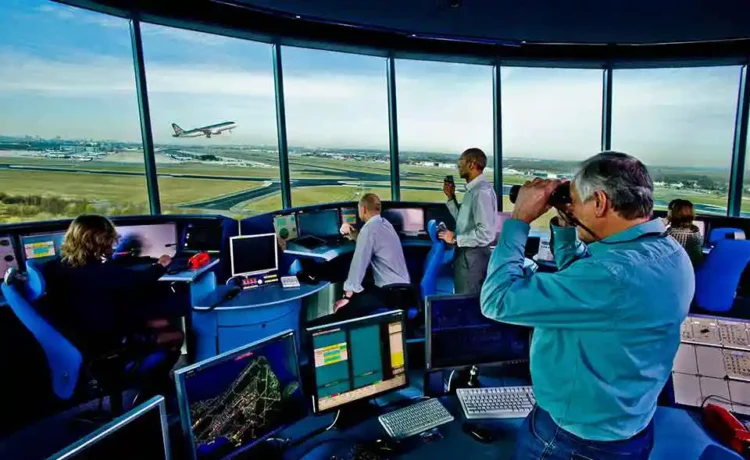
Uncrewed traffic management turns crowded skies into coordinated networks. Remote ID, cloud tracking, and automated conflict resolution replace ad hoc coordination.
These systems protect safety while allowing operations to scale, shifting responsibility toward data management, airspace oversight, and coordination. As low-altitude commerce expands, control moves from isolated towers to shared digital infrastructure that keeps aircraft visible, separated, and accountable. The cost of Sonoran Desert Institute is tied to preparation for digitally managed airspace, where training emphasizes traffic coordination, system monitoring, and compliance rather than individual aircraft control. The future of delivery depends less on airframe design and more on the systems that govern shared skies.