

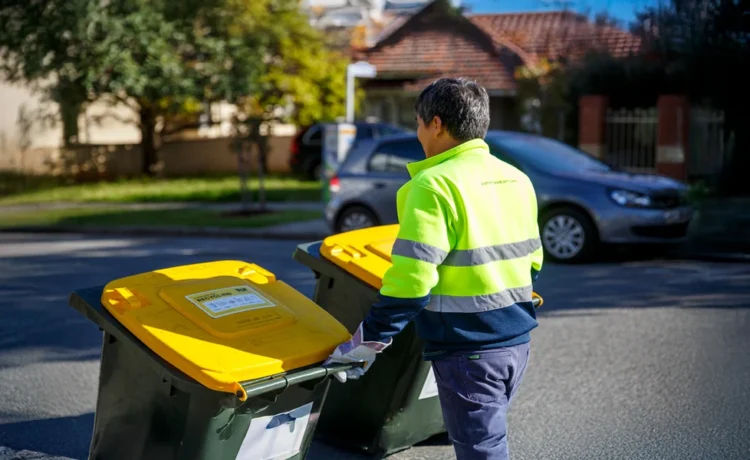
Rubbish collection in Singapore operates on a dual system that most residents interact with daily without fully understanding: scheduled public waste collection through the National Environment Agency’s licensed public waste collectors, and separate private collection for items and volumes that fall outside standard household bins. Understanding how rubbish collection Singapore actually works, and where the public system’s limits sit, clarifies when a resident needs to look beyond the standard collection schedule for something a bin was never meant to handle.
The Public Waste Collection System Explained
Singapore is divided into sectors, each served by a licensed public waste collector operating under a defined contract, and standard household and commercial waste is collected on a scheduled basis as part of this system, typically funded through conservancy charges. This system handles routine daily and weekly waste but is not designed for bulky items, large volumes, or irregular one-off clearances.
What Falls Outside Standard Collection
Furniture, appliances, renovation debris, and any volume beyond what fits in standard bins generally falls outside the scope of routine public collection and requires either a scheduled bulky item collection through the same public collector or a separate private waste removal service. Assuming standard rubbish collection will simply handle an oversized item is a common and avoidable source of frustration.
Scheduled Bulky Item Collection Through Public Collectors
Many public waste collectors offer scheduled bulky item collection for residents, often free or at a modest fee, though slots can be booked out weeks in advance and the collector typically only takes a limited number of items per booking. Checking what a public collector’s bulky item service actually covers before assuming it will handle a full household clearance avoids a mismatch between expectation and what the service actually provides.
When Private Collection Becomes Necessary
A private waste removal service becomes the practical option once volume, timeline, or item type falls outside what public collection efficiently handles, particularly for a full property clearance, a renovation clear out, or same-week collection that public scheduling cannot accommodate. Private services generally cost more but offer considerably more flexibility on timing and volume.
Licensing and What It Actually Means
A licensed waste collector, whether public or private, operates under specific conditions covering how waste is transported and disposed of, and using an unlicensed operator for disposal, particularly of larger volumes, can create liability for improper disposal that traces back to the person who engaged the service. Checking a private operator’s licensing status is a reasonable and quick step before engaging one for any job of real size.
How Conservancy Charges Relate to Collection
Conservancy charges paid through property management or town councils fund the routine public collection system, which is why standard rubbish collection carries no separate per-collection fee for residents, unlike private services which charge directly for each job. Understanding this distinction clarifies why a bulky item collection through the public system feels comparatively inexpensive against a private alternative for the same volume of items.
Recycling Collection as a Separate Stream
Recyclables are collected through a separate blue-bin system distinct from general waste collection, and mixing recyclables into general waste undermines the entire separated collection system’s purpose, even though it does not typically prevent standard collection from proceeding. Understanding which stream a given item belongs to matters more for genuine environmental benefit than for avoiding any immediate practical problem.
What Happens to Collected Waste After Pickup
Collected general waste in Singapore is largely incinerated, with the resulting ash sent to Semakau Landfill, Singapore’s only landfill, which operates under a finite capacity that shapes the entire waste management system’s emphasis on recycling and waste reduction. Understanding this end point gives useful context for why proper waste segregation is emphasized so consistently across the system, since every unnecessary tonne sent to landfill shortens the facility’s remaining working life.
Choosing Between Public and Private Options
The right choice depends on volume, timeline, and item type: routine and bulky items within scheduling flexibility suit the public system, while anything requiring speed, larger volume, or same-week service suits a private operator. Matching the situation to the right system, rather than defaulting to whichever is more familiar, avoids unnecessary cost or delay.
Where Complaints About Collection Actually Go
A missed scheduled collection, a damaged bin, or a dispute over conservancy charges falls under the relevant town council or property management’s purview rather than the waste collector directly, since the collector operates under a service contract with that body rather than a direct relationship with individual residents. Knowing this distinction saves time when a genuine issue needs to be raised, since contacting the collector directly for a billing dispute, for instance, usually just gets redirected back to the town council anyway.
Getting the System Working for You
Making rubbish collection Singapore systems work efficiently means knowing which stream, public or private, actually fits a specific situation, rather than assuming one system handles everything a resident might need cleared. This basic understanding of how the two systems divide responsibility saves considerable time compared with discovering the limits of one system only after already relying on it.