


Streamlining HR and Workforce Management for Growing BusinessesThe Evolution of Modern Workforce Management (WFM)
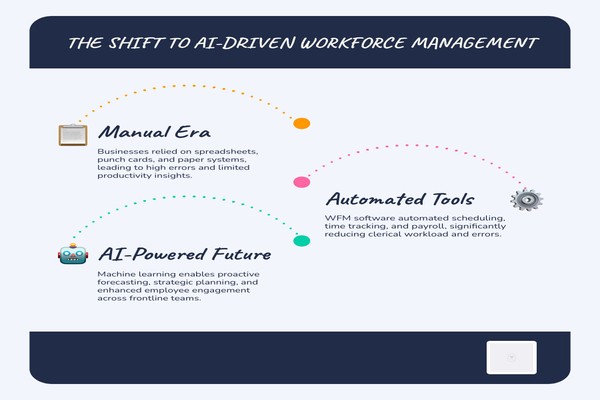
Workforce Management (WFM) has undergone a profound transformation, evolving from rudimentary timekeeping and scheduling to a sophisticated, strategic imperative for businesses worldwide. Historically, WFM was largely a manual, administrative function focused primarily on tracking hours, managing payroll, and ensuring basic shift coverage. Companies often relied on spreadsheets, punch cards, and paper-based systems, leading to inefficiencies, errors, and limited visibility into labor costs and productivity.
The definition of WFM, once confined to operational logistics, has expanded significantly. In May 2026, it encompasses a holistic approach to optimizing the productivity, competency, and engagement of an organization’s workforce. This includes strategically allocating people and resources, tracking attendance, and ensuring compliance with an ever-changing labyrinth of workplace laws and regulations. Modern WFM is about anticipating human capital challenges and taking proactive steps to mitigate liabilities and maintain efficiency. It’s no longer just about filling shifts; it’s about empowering employees, enhancing their experience, and leveraging data to drive strategic business outcomes. This evolution has been largely driven by technological advancements, moving from simple automation to AI-powered intelligence.
The shift has been dramatic:
- From Manual to Automated: Initial WFM software automated basic tasks like time tracking and payroll processing, reducing clerical errors and administrative burden.
- From Reactive to Proactive: Modern systems use historical data and machine learning to forecast labor needs, predict demand fluctuations, and optimize schedules well in advance.
- From Operational to Strategic: WFM now plays a critical role in strategic planning, aligning workforce capabilities with business objectives, and contributing to overall organizational agility.
- Focus on Employee Experience: Beyond just efficiency, contemporary WFM prioritizes flexible scheduling, transparent communication, and self-service options, recognizing that engaged employees are more productive. This is especially true for frontline workers, whose experience is now a key focus.
This evolution reflects a broader understanding that human capital is a dynamic asset requiring continuous optimization. The trends of May 2026, including remote work, distributed teams, and the gig economy, have only accelerated the need for flexible, intelligent WFM solutions that can adapt to rapid changes while maintaining productivity and compliance.
Core Functions of a Modern Workforce Management Solution
At its heart, a modern Workforce Management solution is an integrated suite of tools designed to streamline the complex processes involved in managing an organization’s labor force. These solutions move far beyond simple time clocks, offering sophisticated capabilities that empower businesses to optimize their operations and support their employees effectively.
The core components and key functions typically include:

- Labor Forecasting and Budgeting: Utilizing historical data, seasonal trends, and predictive analytics, WFM software can accurately forecast staffing needs. This ensures the right number of employees with the right skills are available at the right time, preventing both overstaffing (and excessive costs) and understaffing (and lost productivity or customer dissatisfaction). Advanced systems can even show how proposed schedules impact budgets in real-time.
- Employee Scheduling: This is a cornerstone of WFM. Modern software automates schedule creation, taking into account demand forecasts, employee availability, skills, preferences, and labor laws. Features like self-scheduling, shift trading, and automated notifications enhance flexibility and employee satisfaction while ensuring optimal coverage.
- Time and Attendance Tracking: Accurate tracking of employee hours worked, breaks, and overtime is fundamental for payroll accuracy and compliance. Solutions offer various clock-in methods, including biometric scanners, mobile apps with geofencing, and web-based portals, minimizing time theft and ensuring precise data capture.
- Absence Management: Managing planned and unplanned absences (e.g., PTO, FMLA, sick leave) is crucial. WFM systems automate leave requests, approvals, and tracking, ensuring compliance with leave policies and legal requirements, while also facilitating seamless backfill scheduling.
- Compliance Management: This is a critical function, especially in May 2026 with complex and frequently changing labor laws. WFM solutions help employers comply with wage and hour laws, collective bargaining agreements, and other regulatory mandates. They can configure work and pay rules, generate alerts for potential violations, and track employee eligibility and leave balances. For instance, ensuring all new hires meet employment eligibility criteria is paramount, and businesses often rely on Expert workforce E-Verify guidelines to navigate these requirements accurately and efficiently.
- Reporting and Analytics: Robust reporting capabilities provide valuable insights into labor costs, productivity metrics, overtime trends, and compliance adherence. These analytics help identify areas for improvement, inform strategic decisions, and demonstrate ROI.
Key Components of Workforce Management Software
Beyond these core functions, modern WFM software integrates several key components to deliver a comprehensive solution:
- Time Tracking: As mentioned, this is foundational, capturing precise start and end times, breaks, and project-specific hours.
- Mobile Accessibility: Employees and managers can access schedules, request time off, clock in/out, and communicate from anywhere, anytime, via mobile apps. This is crucial for distributed and frontline workforces.
- Self-Service Portals: Empowering employees to manage their schedules, view pay stubs, request leave, and update personal information reduces administrative burden on HR and improves employee engagement.
- Automated Workflows: From leave request approvals to schedule change notifications, automated workflows streamline processes, reduce manual intervention, and minimize errors.
- Leave Balances and FMLA Tracking: Automated tracking ensures accurate accrual and usage of leave, preventing compliance issues related to FMLA and state-specific leave laws.
- Audit Trails: Comprehensive audit trails provide a record of all changes and actions within the system, crucial for compliance and dispute resolution.
Integrating Workforce Management with Payroll
The seamless integration of WFM with payroll systems is a non-negotiable aspect of modern workforce management. This integration eliminates the need for manual data entry between systems, drastically reducing errors and saving significant administrative time.
Here are the key benefits of this integration:
- Direct Exports: Time and attendance data, including regular hours, overtime, and leave, can be directly exported to payroll systems, ensuring accurate and timely compensation.
- Error Reduction: Automated data transfer minimizes human error associated with manual data entry, leading to more accurate payroll and fewer discrepancies.
- Complex Pay Rates: WFM solutions can automatically calculate complex pay rates, including differentials for shifts, skills, or locations, as well as various overtime scenarios, ensuring compliance with wage laws.
- Overtime Alerts: Proactive alerts notify managers when employees are approaching overtime thresholds, allowing for timely adjustments to prevent excessive labor costs.
- Automated Timesheets: Digital timesheets are automatically populated with clocked hours, simplifying the approval process for managers and ensuring employees are paid correctly for their work.
- Tax Compliance: Accurate time and attendance data directly feeds into payroll, supporting accurate tax calculations and reporting.
Integrating WFM and payroll transforms a potentially chaotic, error-prone process into a streamlined, efficient operation, contributing significantly to cost control and compliance.
The Business Impact: ROI and Efficiency Gains
The strategic implementation of Workforce Management solutions delivers tangible, measurable benefits that directly impact a company’s bottom line and operational efficiency. The return on investment (ROI) from modern WFM software is often substantial, making it a critical investment for businesses aiming for sustainable growth and profitability.
Consider these compelling statistics, reflecting the significant gains organizations are achieving with advanced WFM:

- 450% ROI total overall economic impact: This impressive figure highlights the comprehensive financial advantages, from cost savings to increased revenue, that WFM can deliver.
- 80% Gain in scheduling efficiency: Automating scheduling processes dramatically reduces the time and effort managers spend creating and adjusting schedules, freeing them up for more strategic tasks.
- 11% Decrease in customer labor costs: Optimized staffing and reduced overtime directly translate into lower labor expenditures without compromising service quality.
- 5.2% Increase in revenue per labor hour: By ensuring optimal staffing levels and maximizing employee productivity, businesses can generate more revenue from every hour worked.
- 95% Less Time creating schedules and running payroll: This administrative time saving allows HR and operations teams to focus on higher-value activities.
- $1,000+ saved a week in time theft costs: Features like biometric clock-ins, geofencing, and accurate time tracking virtually eliminate “buddy punching” and other forms of time theft.
- 50% reduction in timesheet auditing time: Automated systems and clear audit trails simplify the process of verifying timesheets, saving valuable administrative hours.
- 85% reduction in administrative work: Across various WFM functions, automation significantly cuts down on manual tasks, improving efficiency.
- 50% drop in overtime: Better forecasting and scheduling tools enable managers to proactively manage and reduce unnecessary overtime, a major contributor to labor costs.
- 11% decrease in labor costs: This broad reduction reflects the combined impact of optimized scheduling, reduced overtime, and improved productivity.
- 12% increase in sales per labor hour: By ensuring the right staff are available during peak demand, businesses can capitalize on sales opportunities more effectively.
Beyond these financial metrics, WFM also contributes to:
- Cost Control: By minimizing overstaffing, reducing unnecessary overtime, and eliminating time theft, WFM directly impacts labor costs, which are often a business’s largest expense.
- Improved Productivity: Optimal staffing levels mean employees are neither overwhelmed nor underutilized, leading to higher output and better service delivery.
- Enhanced Employee Satisfaction: Flexible scheduling options, transparent communication, and accurate payroll contribute to a more positive employee experience, reducing turnover and boosting morale. When employees feel valued and their work-life balance is respected, they are more engaged and productive.
- Minimized Compliance Risk: Automated tracking and alerts help businesses avoid costly fines and legal challenges associated with labor law violations.
The evidence is clear: implementing a robust WFM solution is not just about efficiency; it’s a strategic move that drives significant financial and operational improvements, securing a competitive edge in May 2026.
Overcoming Challenges with AI and Automation
Traditional or legacy Workforce Management systems often present a myriad of challenges that can hinder operational efficiency, increase costs, and even compromise compliance. These systems typically suffer from limited agility, fragmented visibility across different departments or locations, and inflexible scheduling capabilities. They often rely on manual data entry, leading to errors, delays, and a lack of real-time insights.
However, the integration of Artificial Intelligence (AI), automation, and mobile accessibility is revolutionizing WFM, transforming these challenges into opportunities:
- Addressing Legacy System Inefficiencies: AI and automation provide the intelligence and speed that legacy systems lack. Instead of manual forecasting, AI-powered tools analyze vast datasets (historical sales, weather patterns, events) to predict demand with remarkable accuracy, enabling proactive staffing adjustments.
- Fragmented Visibility to Unified Insight: Modern WFM solutions centralize data from various sources – time clocks, HR systems, payroll, and even external factors – into a single dashboard. This unified view provides real-time insights into labor costs, productivity, and compliance across the entire organization, eliminating information silos.
- Enhanced Scheduling with Predictive Analytics: AI-driven scheduling algorithms consider not only demand but also employee skills, preferences, certifications, and labor laws to create optimal schedules automatically. This reduces the time managers spend on scheduling and ensures better coverage and employee satisfaction.
- Mobile Accessibility for a Dynamic Workforce: With mobile apps, employees can clock in/out, view schedules, request time off, and communicate with managers from their smartphones. Managers can approve requests, adjust schedules, and monitor team performance on the go. This is particularly vital for distributed teams, field service workers, and frontline staff.
- Combatting Time Theft with Geofencing and Biometrics: Mobile clock-in features often incorporate geofencing, allowing employees to clock in or out only when they are within a designated work area. Biometric security (fingerprint, facial recognition) at physical time clocks virtually eliminates “buddy punching” and ensures accurate time capture, saving businesses significant amounts in potential time theft.
- Automated Compliance: AI and automation embed compliance rules directly into the system. This means alerts for overtime thresholds, automatic application of complex pay rules, and tracking of leave entitlements (like FMLA) are handled without manual oversight, drastically reducing the risk of violations.
- Empowering Frontline Workers: Platforms like Workday Illuminate™ and Infor WFM focus on empowering frontline workers with self-service tools and flexible scheduling options. This autonomy boosts morale and engagement, contributing to a more productive workforce.
- Intelligent Task Assignment: Beyond scheduling, AI can optimize task assignment based on employee skills, certifications, and real-time workload, ensuring that critical tasks are completed efficiently by the most qualified individuals.
- Customized Workforce Management: Every business has unique needs, and modern WFM solutions, especially those from providers specializing in Customized Workforce Management, leverage AI and automation to configure rules, workflows, and reporting to precisely match an organization’s specific operational requirements and industry regulations. This tailoring ensures the solution truly solves the unique challenges faced by the business.
By embracing these technological advancements, organizations can move beyond the limitations of traditional systems, achieving unprecedented levels of efficiency, compliance, and employee engagement in May 2026.
Future Trends: Remote Work and Total Workforce Management
The landscape of work has been irrevocably altered, with remote work and distributed teams becoming mainstream. In May 2026, these trends, alongside the rise of the contingent workforce and the gig economy, are profoundly shaping the future of Workforce Management. WFM is no longer just about managing employees under one roof; it’s about orchestrating a diverse, often geographically dispersed, talent pool.
Here are the key trends defining the future of WFM:
- Remote and Hybrid Work Models: WFM solutions must seamlessly support employees working from anywhere. This requires robust mobile accessibility, secure cloud-based platforms, and tools for virtual collaboration, communication, and performance monitoring that respect employee privacy.
- Distributed Teams: Managing teams spread across different cities, states, or even countries introduces complexities related to varying labor laws, time zones, and cultural nuances. WFM systems need to provide centralized visibility while accommodating regional compliance requirements.
- Total Workforce Management (TWM): This integrated approach recognizes that an organization’s workforce comprises both permanent employees and external talent (freelancers, contractors, consultants, service providers). TWM aims to provide a holistic view and integrated management of this entire talent ecosystem, often by integrating Human Capital Management (HCM) systems with Vendor Management Systems (VMS). This ensures optimal utilization of all resources, internal and external.
- Contingent Workers and the Gig Economy: The increasing reliance on non-employee talent demands WFM solutions that can manage onboarding, scheduling, payment, and compliance for this flexible workforce, offering agility and access to specialized skills.
- Worker Wellness and Employee Experience: Beyond efficiency, future WFM prioritizes employee well-being. This includes flexible scheduling options, tools for capturing employee sentiment (e.g., pulse surveys), and features that promote work-life balance and mental health. A positive employee experience is directly linked to retention and productivity.
- Skills-Based Workforce Planning: As job roles evolve rapidly, WFM is shifting towards understanding and optimizing a workforce based on individual skills and competencies rather than just job titles. AI-driven tools will help identify skill gaps, recommend training, and match projects to the most suitable talent.
- AI and Machine Learning Deepening Integration: AI will move beyond just forecasting and scheduling to more predictive and prescriptive analytics, offering insights into potential compliance risks, employee turnover likelihood, and optimal team compositions.
- Hyper-Personalization: WFM systems will offer more personalized experiences for employees, allowing greater control over their schedules and work preferences, fostering autonomy and engagement.
- Compliance for a Global Workforce: As teams become more global, WFM solutions will need to navigate an increasingly complex web of international labor laws, data privacy regulations, and tax requirements.
These trends underscore the need for WFM solutions that are adaptable, intelligent, and employee-centric. Organizations that proactively embrace these shifts will be better positioned to attract, retain, and optimize their diverse talent pool, ensuring resilience and competitiveness in the evolving world of work.
Choosing the Right Solution for Your Business
Selecting the ideal Workforce Management solution is a strategic decision that can significantly impact your business’s efficiency, compliance, and employee satisfaction. With a multitude of options available in May 2026, it’s crucial to approach this choice systematically, aligning the solution with your unique organizational needs and long-term goals.
Here’s a comprehensive guide to choosing the right WFM solution:
- Define Your Existing Processes and Pain Points: Before looking at solutions, thoroughly audit your current WFM processes. What are your biggest challenges? Are you struggling with manual scheduling errors, excessive overtime, compliance risks, or high administrative burden? Understanding your current state will help you articulate your needs.
- Gather Feedback from Key Stakeholders: Involve managers, employees, HR, and payroll teams in the decision-making process. Their insights into daily operations, pain points, and desired improvements are invaluable for creating a comprehensive “wish list” of features and functionalities.
- Assess Your Organization’s Maturity Level: Are you moving from entirely manual processes, or are you upgrading from an older, less capable system? Your current technological maturity will influence the complexity and features you need in a new solution.
- Prioritize Key Features and Functionalities: Based on your pain points and stakeholder feedback, identify the essential features. Do you need advanced labor forecasting, complex pay rule automation, robust mobile capabilities, or deep integration with existing HRIS/payroll systems?
- Consider Scalability: Choose a solution that can grow with your business. It should be able to accommodate an increasing number of employees, new locations, and evolving operational requirements without requiring a complete overhaul.
- Evaluate User Experience (UX): A WFM system, no matter how powerful, is only effective if people use it. Look for intuitive interfaces, easy navigation, and self-service options for both employees and managers. A poor UX can lead to low adoption rates and negate potential benefits.
- Assess Integration Capabilities: Your WFM solution should seamlessly integrate with your existing HR, payroll, ERP, and potentially other business systems. This prevents data silos, eliminates double entry, and ensures data consistency across your organization.
- Look for Robust Reporting and Analytics: The ability to generate actionable insights from your workforce data is crucial. Ensure the solution offers customizable reports, dashboards, and predictive analytics to inform strategic decision-making.
- Consider Cloud-Based SaaS Solutions: Cloud-based Software-as-a-Service (SaaS) models are the industry standard in May 2026. They offer flexibility, automatic updates, lower upfront costs, and enhanced accessibility compared to on-premise systems.
- Prioritize Mobile-First Design: Given the prevalence of mobile devices, especially for frontline and distributed workforces, a solution with strong mobile capabilities is essential.
- Evaluate Vendor Support and Implementation: Research the vendor’s reputation for customer support, implementation services, and ongoing training. A smooth implementation and reliable support are critical for long-term success.
- Request Demonstrations and Pilot Programs: See the software in action. Ask vendors to demonstrate scenarios specific to your business. If possible, run a pilot program with a small team to test the solution’s effectiveness in a real-world environment.
Key Selection Criteria:
- Business Drivers: What specific business problems are you trying to solve?
- Goals: What measurable outcomes do you expect (e.g., reduce overtime by X%, increase scheduling efficiency by Y%)?
- Current Challenges: What are the biggest pain points in your existing processes?
- Objectives: How will the WFM solution help you achieve your broader organizational objectives?
By meticulously evaluating these factors, businesses can confidently choose a WFM solution that not only addresses current needs but also positions them for future success and growth.
Frequently Asked Questions about Workforce Management
What is the difference between HR and WFM?
While often intertwined, Human Resources (HR) and Workforce Management (WFM) serve distinct yet complementary functions within an organization. HR typically focuses on the broader, long-term employee lifecycle, encompassing recruitment, onboarding, talent development, performance management, compensation and benefits, employee relations, and strategic workforce planning. It deals with the “people” aspect of the business.
Workforce Management, on the other hand, is more operational and tactical, concentrating on the day-to-day management of the workforce to optimize productivity and efficiency. Its primary concerns include labor forecasting, employee scheduling, time and attendance tracking, absence management, and ensuring compliance with immediate labor laws. While HR might define the overall leave policy, WFM handles the tracking and approval of individual leave requests. Essentially, HR builds and nurtures the workforce, while WFM ensures that workforce is deployed effectively and compliantly on an ongoing basis.
How does WFM software help with compliance?
WFM software is a powerful tool for navigating the complexities of labor law compliance. It helps in several critical ways:
- Automated Rule Enforcement: Modern systems allow businesses to configure specific labor laws, company policies, and collective bargaining agreements directly into the software. This automates the application of rules related to breaks, overtime thresholds, minimum wage, and shift differentials, reducing the risk of manual errors and violations.
- Real-time Alerts: The software can generate proactive alerts for managers when an employee is approaching an overtime limit, a mandatory break is due, or a scheduling conflict violates a rule. This allows for timely adjustments to prevent non-compliance.
- Accurate Record-Keeping: WFM systems meticulously track all time and attendance data, including clock-ins/outs, breaks, and leave. This creates an unalterable audit trail, providing verifiable documentation in case of audits or legal disputes.
- Leave Management: It automates the tracking of various types of leave (e.g., FMLA, state-specific sick leave, PTO accruals), ensuring employees take their entitled leave and that the business remains compliant with complex leave regulations.
- Eligibility Verification: For new hires, WFM can integrate with systems that help verify employment eligibility, ensuring all employees are legally authorized to work.
- Reporting and Analytics: Compliance reports can be generated on demand, providing a clear overview of adherence to labor laws and identifying potential areas of risk.
By automating these processes, WFM software significantly reduces the administrative burden of compliance and minimizes the financial and reputational risks associated with violations.
Can small businesses benefit from WFM tools?
Absolutely. While often perceived as solutions for large enterprises, WFM tools offer substantial benefits for small businesses, often with an even faster return on investment (ROI). Small businesses frequently operate with leaner teams and tighter budgets, making efficiency and cost control paramount.
Here’s how WFM tools help small businesses:
- Eliminate Manual Errors: Small businesses often rely on manual scheduling and time tracking, which are prone to errors that can lead to incorrect payroll, compliance issues, and wasted administrative time. WFM software automates these processes, ensuring accuracy.
- Prevent Time Theft: “Buddy punching” and inaccurate time reporting can disproportionately impact a small business’s bottom line. Features like biometric scanners or mobile geofencing can virtually eliminate these issues, saving significant labor costs.
- Reduce Administrative Burden: For small business owners or managers who often wear multiple hats, WFM software frees up valuable time spent on scheduling, payroll preparation, and absence management, allowing them to focus on core business activities.
- Control Labor Costs: By providing clear visibility into labor costs, helping manage overtime, and optimizing schedules, WFM tools empower small businesses to make smarter staffing decisions and avoid unnecessary expenses.
- Ensure Compliance: Small businesses are just as susceptible to labor law violations as large ones, but often lack dedicated legal or HR teams. WFM software helps automate compliance, reducing the risk of costly fines.
- Improve Employee Satisfaction: Offering flexible scheduling and transparent communication through a WFM portal can significantly boost morale and retention, which is crucial for small businesses that rely heavily on each team member.
Many WFM providers offer scalable, affordable solutions tailored to the needs and budgets of small and medium-sized businesses, making them an accessible and valuable investment.
Final Thoughts on Workforce Optimization
In the rapidly evolving business landscape of May 2026, effective workforce management transcends mere operational necessity; it is a strategic differentiator. It’s no longer just about tracking hours or filling shifts; it’s about cultivating a dynamic, flexible, and responsive environment where both the business and its most valuable asset – its employees – can truly thrive. By leveraging the power of AI, automation, and integrated platforms, organizations can transform their approach to labor, turning what was once a significant cost center into a competitive advantage. The ability to accurately forecast demand, optimize schedules, ensure seamless compliance, and empower employees with self-service tools is paramount for sustained success.
Ready to simplify compliance, boost productivity, and elevate employee satisfaction within your organization? Explore how modern WFM solutions can transform your operations and prepare your business for the future.