

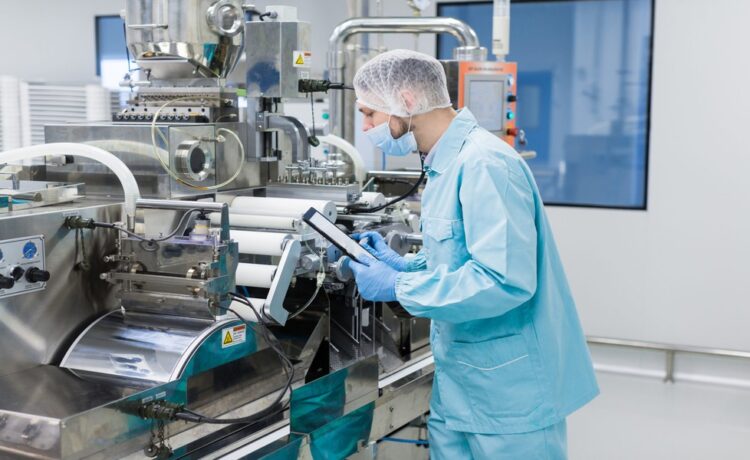
A medical contract manufacturer that delivers both quality and scalable output gives device companies the confidence to enter new markets, respond to demand surges, and maintain uninterrupted supply to healthcare providers globally. The medical device industry operates under regulatory scrutiny that leaves no margin for production error. Every surgical instrument, diagnostic component, and implantable device must trace back to a verified manufacturing process. Partnering with a contract manufacturer that has embedded quality into its core operations from the ground up allows OEMs to focus on innovation while production scales to meet commercial targets.
Quality as the Starting Point
Design Transfer and Process Validation
Quality in medical device production begins long before the first unit leaves the factory floor. During design transfer, the contract manufacturer’s engineering team reviews drawings, material specifications, and functional requirements alongside the device company’s designers. They identify features that influence patient safety, flag potential process risks, and recommend design modifications that improve manufacturability without altering clinical function.
Process validation follows a structured protocol. Installation qualification confirms that equipment operates within specified parameters. Operational qualification tests the process across its intended operating range. Performance qualification produces consecutive lots under production conditions, verifying that output meets all acceptance criteria. Only after completing these three stages does serial production commence.
Statistical Process Control
Once production begins, statistical process control charts track critical dimensions, weights, and surface characteristics in real time. Control limits derived from validation data trigger immediate corrective action when a parameter drifts toward the edge of its acceptable range. This approach catches variation before it produces nonconforming product, reducing scrap rates and protecting patient safety.
Scaling Production Without Losing Control
Professor Loh Han Tong, from the Department of Industrial Systems Engineering at the National University of Singapore, observed at a 2024 medical manufacturing symposium: “The challenge for contract manufacturers is not producing more. It is producing more while proving that every additional unit is identical to the first. Digital quality systems and automated inspection make this achievable at volumes that were impractical a decade ago.”
Scaling from pilot runs of a few hundred units to monthly volumes of 20,000 or more requires deliberate infrastructure planning.
Capacity Planning and Workforce Readiness
The manufacturer assesses equipment utilisation rates, identifies bottleneck stations, and invests in redundant machinery before volume commitments exceed current capacity. Cross-training programmes prepare operators to work across multiple product lines, providing flexible staffing that absorbs demand fluctuations without compromising skill levels at each individual workstation.
Shift patterns expand from single to double or triple coverage as volumes increase. Each shift operates under the same documented procedures, supervised by trained quality technicians who verify adherence to work instructions at defined intervals throughout the production run.
Automation and Inspection Integration
Automated assembly stations handle repetitive tasks with consistent speed and precision. Vision inspection systems photograph every part at multiple angles, comparing images against reference standards to detect surface defects, dimensional variation, or assembly errors. These systems process thousands of parts per hour and flag any unit that falls outside tolerance for segregation and review by quality engineers.
Regulatory Frameworks That Govern Output
A medical contract manufacturer must satisfy multiple regulatory frameworks simultaneously to support clients selling in different markets:
- ISO 13485 certification for quality management systems specific to medical devices
- FDA 21 CFR Part 820 compliance for products distributed in the United States
- EU Medical Device Regulation 2017/745 conformity assessment for European market access
- Health Sciences Authority registration for devices sold within Singapore
Each framework requires documented evidence that the manufacturer controls its processes, monitors product quality, investigates complaints, and implements corrective actions when deviations occur. Audit readiness is a continuous state, not a periodic exercise.
Clean Room and Controlled Environment Capabilities
Particulate and Environmental Control
Medical devices classified as moderate or high risk often require assembly in ISO Class 7 or Class 8 clean rooms. These rooms maintain specified limits on airborne particles through HEPA-filtered air systems, positive pressure differentials, and controlled personnel access. Temperature and humidity stay within defined bands to prevent condensation on surfaces or dimensional changes in sensitive materials.
Gowning procedures, material transfer protocols, and cleaning schedules are documented and enforced. Environmental monitoring logs provide auditable records that support regulatory submissions and customer audits.
Material Traceability and Supply Chain Management
Every raw material lot enters the facility with a certificate of analysis and undergoes incoming inspection. Material traceability links each finished device to its specific raw material batch, process parameters, equipment identifiers, and operator records. This chain of documentation supports recall investigations and post-market surveillance obligations.
Dual-sourcing strategies for critical materials protect against supply disruptions. The manufacturer qualifies alternative suppliers through the same testing and approval process applied to primary sources, ensuring seamless transition when contingency sourcing is activated.
Delivering Quality at Every Scale
Device companies that require a dependable medical device production partner benefit from engaging a manufacturer where quality systems and scalable infrastructure operate as a single integrated platform. This alignment ensures that a medical contract manufacturer delivers certified, traceable products at pilot volumes and at full commercial scale with equal reliability across every production lot.